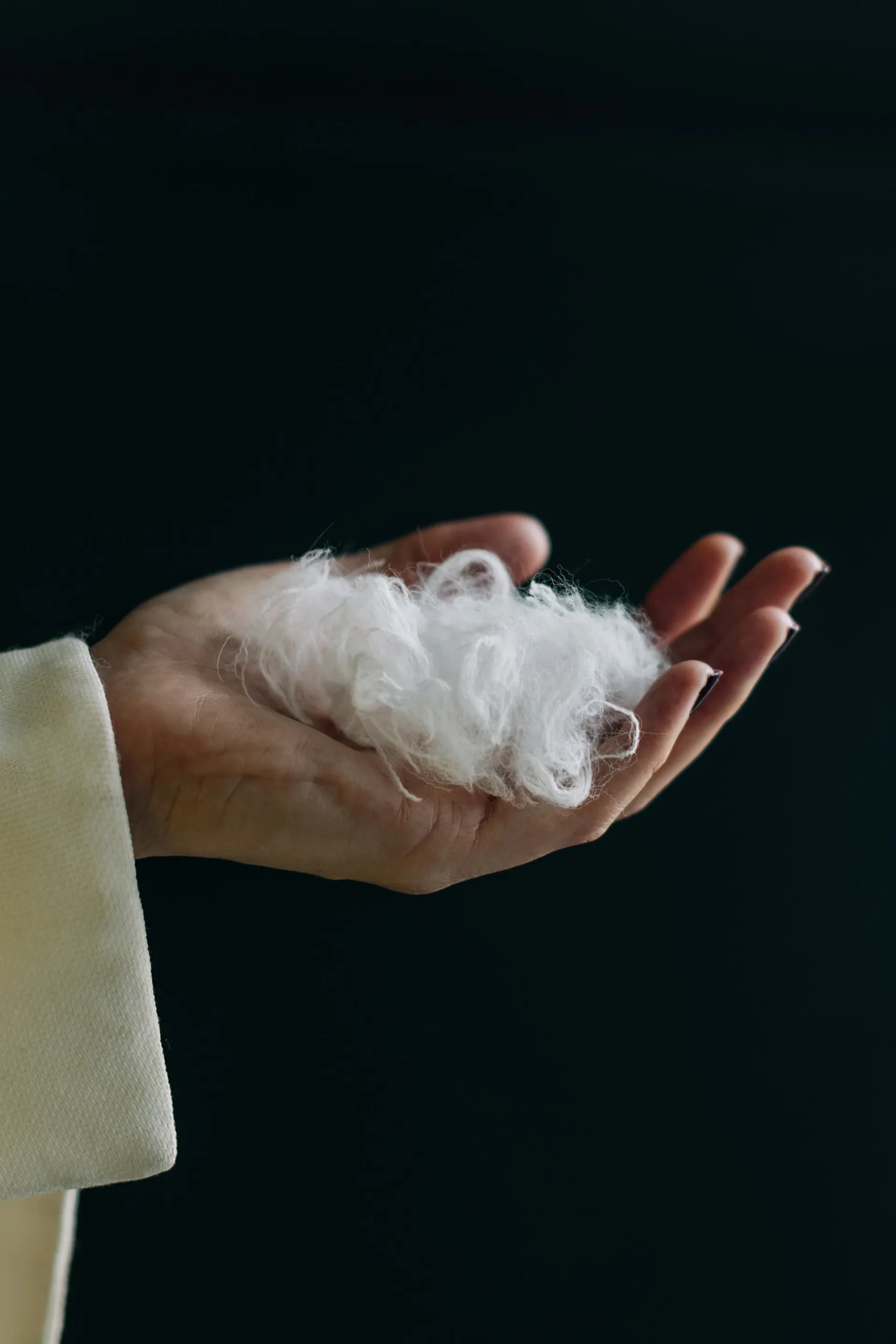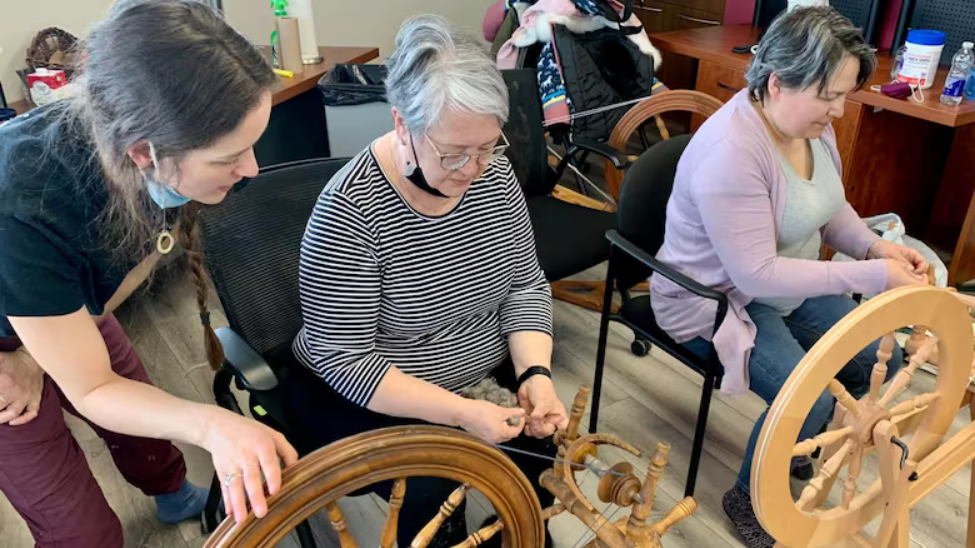
Beneath the thick, coarse fur of the muskox lies a secret: a wool that’s light, soft, and incredibly warm. Recently, a group of people in Kuujjuaq, Quebec, learned how to transform this luxurious material into yarn.
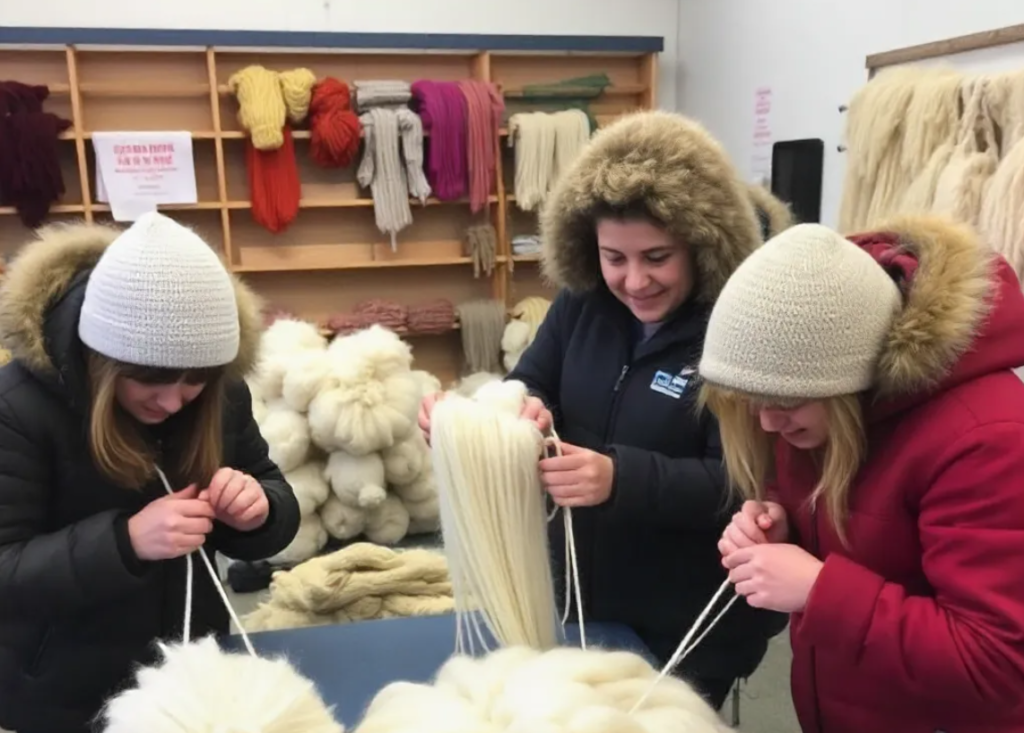
The process begins with a good brushing — no simple task when it comes to a large wild animal. But with time, patience, and some sturdy pet brushes, instructor Rachel Guindon guided the students through the steps of collecting the material, known as qiviut, washing it, and spinning it for use in crafts.
“The ladies in the workshop were fantastic — so motivated, laughing constantly, and very curious, asking lots of questions,” Guindon said. “I think they were really happy to gain new knowledge and techniques… I was very impressed by them.”
Guindon traveled from Quebec City to Kuujjuaq for the three-day workshop, which ran from March 21 to 23. Thanks to a local donation, participants had a large spring muskox hide to work with. They also learned about the history and ecology of muskox, with Elder Mae Angnatuk visiting each day to share her knowledge of the animals.
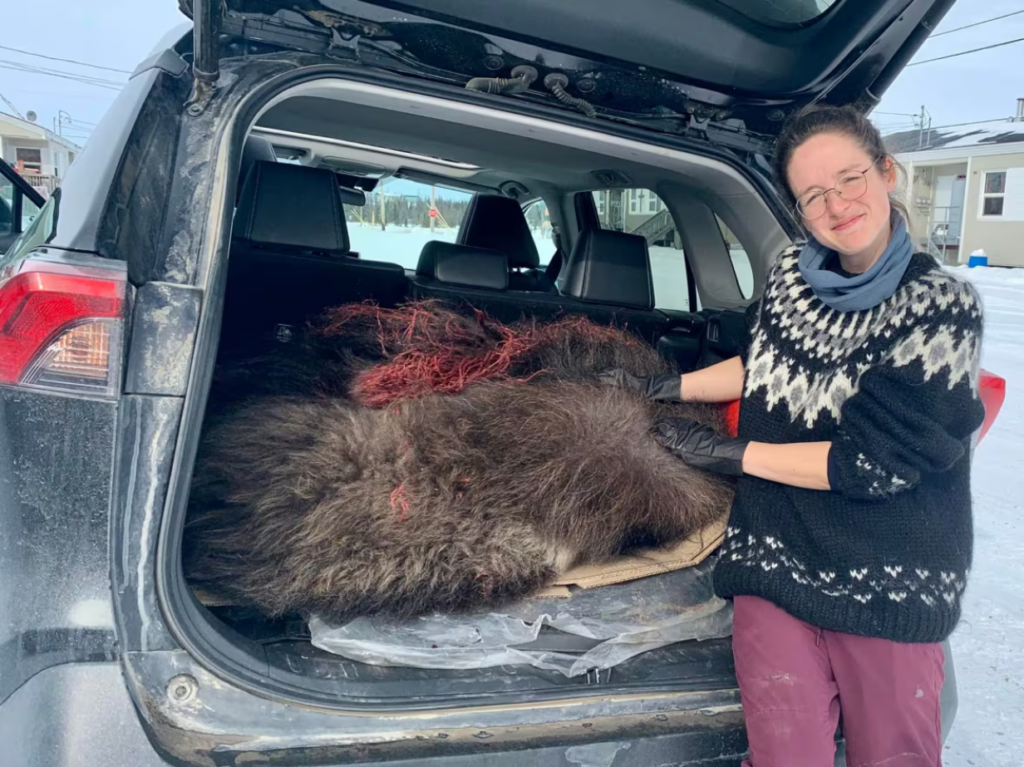
A typical spring muskox sheds around four pounds of qiviut, a soft wool found beneath its thick guard hairs. This insulating layer helps the muskox stay warm through the harsh winters. In the spring, it sheds the wool over a few days.
Mary Saunders, an education consultant for cultural programs with Kativik Ilisarniliriniq, who helped organize the workshop, explained that qiviut can also be collected from the ground if you know where muskox have been. The wool, which resembles clumps of brown plants, can be found in the animals’ usual habitats.
Saunders noted that many people in Nunavik aren’t yet familiar with muskox, as the large creatures were only introduced to northern Quebec in the 1970s. “We’re slowly getting to know them and learning all the different ways to use muskox,” Saunders said. “Their fur is incredibly warm — I’ve heard it’s even warmer than down feathers. It’s exciting to explore an animal like that and make use of more of it.”
Guindon’s interest in spinning qiviut began as a “side passion” during her master’s studies, where she researched muskox and plants. Over the past two years, she’s delved deeper into learning about the fibre and its unique properties.
She explained that qiviut makes excellent insulation — it can be used in snowpants or as liners for mittens and kamiks. Compared to many synthetic yarns, it’s far superior. “It’s softer than cashmere and eight times warmer than sheep wool. And the best part is it’s incredibly light, so it won’t feel heavy on you,” she said. “It has wonderful properties, which makes it a fantastic fibre for yarn.”
Saunders, who took part in the entire workshop, said there are plans to bring Guindon to other parts of Nunavik to teach more qiviut workshops. Umiujaq is next on the list. “It’s fun to learn new things and discover what we can do with different animals,” Saunders said. “I’d encourage everyone to try to learn more about muskox.”